
The 29TH MGSA SYMPOSIUM
October 15-18, 2026 · University of Illinois Chicago, Chicago, IL
Politeness and Polarization: Political and Social Transformations of α Greek Stereotype
Keynote address by Michael Herzfeld (Harvard University)
Early ethnographic studies of Greek society emphasized its competitive or “agonistic” side. This was a stereotype widely shared by Greeks themselves and was sometimes exploited to justify confrontation and competition; it offered a sharp contrast to equally stereotypical images of other codes of etiquette from other parts of the world. In recent years, under an increasing pressure to “Europeanize,” Greek social interaction – in which thanking people was once considered almost a solecism – has become markedly more polite, with many new expressions of cordiality (καλή συνέχεια, for example). More concerningly, violent ideologies have also adopted a “polite” exterior (δεν είμαι ρατσιστής, αλλά...), as has happened elsewhere in Europe. The speaker will argue that (a) the new politeness continues and even reinforces an older habit of presenting a façade of propriety to outsiders while (b) it shields culturally intimate forms of rivalry and competition, some of which – paradoxically from an outsider perspective – have led to cordial and even affectionate relationships. From the entente between Konstantinos Karamanlis and Andreas Papandreou and the present-day conduct of parliamentary interaction to the revival of Civil War extremism at both edges of the political spectrum, the new politeness does not so much belie the old ethnographic portrayals as show why these continue to be essential for a serious understanding of social and political dynamics in Greece today.
 National Hellenic Museum
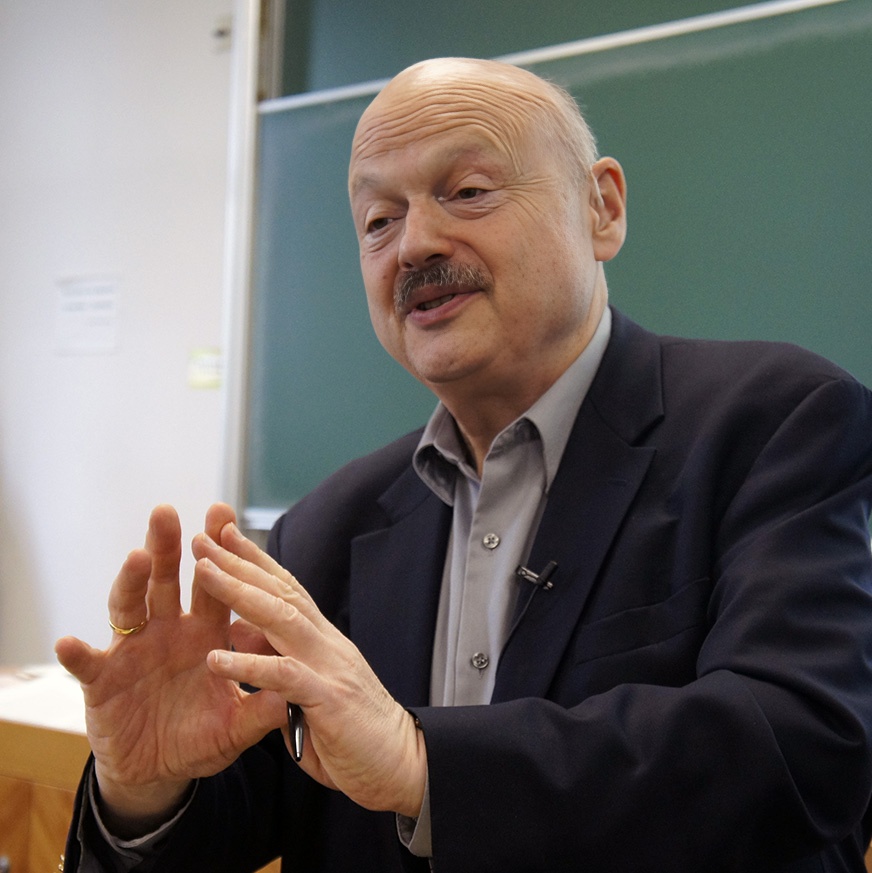
Photo credit by Wankun Ser
Michael Herzfeld is Ernest E. Monrad Professor of the Social Sciences Emeritus in the Department of Anthropology at Harvard University; he also holds emeritus rank at Leiden University and is affiliated with the University of Rome “Tor Vergata.” Author of fifteen monographs (many of them focused on Greece) and producer of two ethnographic films, he has been deeply engaged in Modern Greek Studies from his undergraduate years to the present. His first teaching appointment was with College Year in Athens. His Greek research includes the history and current processes of Greek identity formation; the social practices of Cretan shepherds; the politics of heritage, archaeology, and conservation; anthropological approaches to Greek language and literature; and the role of nationalism and bureaucracy in everyday life. He was made an honorary citizen of Greece in 2021; the official citation highlighted his role in making Greece an object of theoretical importance in the social sciences and in promoting Modern Greek Studies in the English-speaking world.